Institutional Power and Representation
This section brings together artworks that critically examine how cultural institutions shape representation, visibility and identity. Rather than treating museums and galleries as neutral spaces, these works reveal how institutional practices such as collecting, classification, display, interpretation and labour influence what is seen, how it is understood, and whose perspectives are prioritised. Through artistic intervention, they expose hidden structures of authority within cultural institutions and question how these structures affect the representation of marginalised communities, histories and identities.
Artwork list
01/ The Past Is Now, UAL decolonising arts institute, 2017-2018
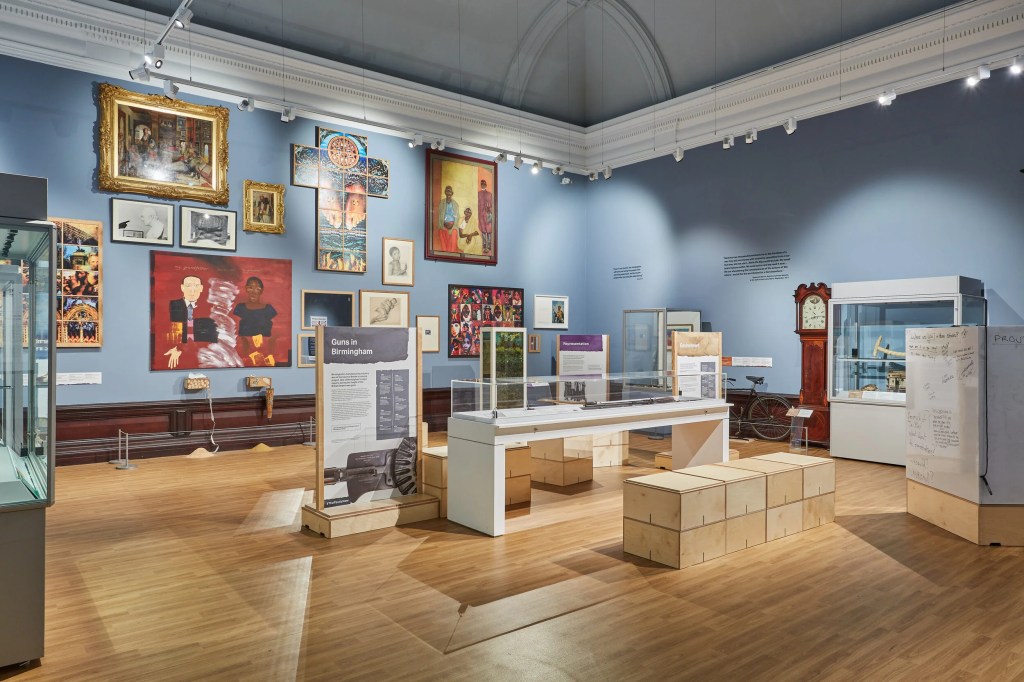
However, they also acknowledged the limitation that they need more reconciliation to healing rather than just starting anger. The project especially the ideo reflection on the exhibition makes it particularly relevant to my research because it reveals the power of museum and institutions in shaping the historical narratives of a community or even a nation. It also suggests that decolonizing is more than including more diversity. When it comes to institutional decision-making, participation can diversify representation without necessarily producing an equal redistribution of curatorial authority.
https://www.youtube.com/watch?v=MXLfdwdCj0I
02/ Museum Mandala Bhakti
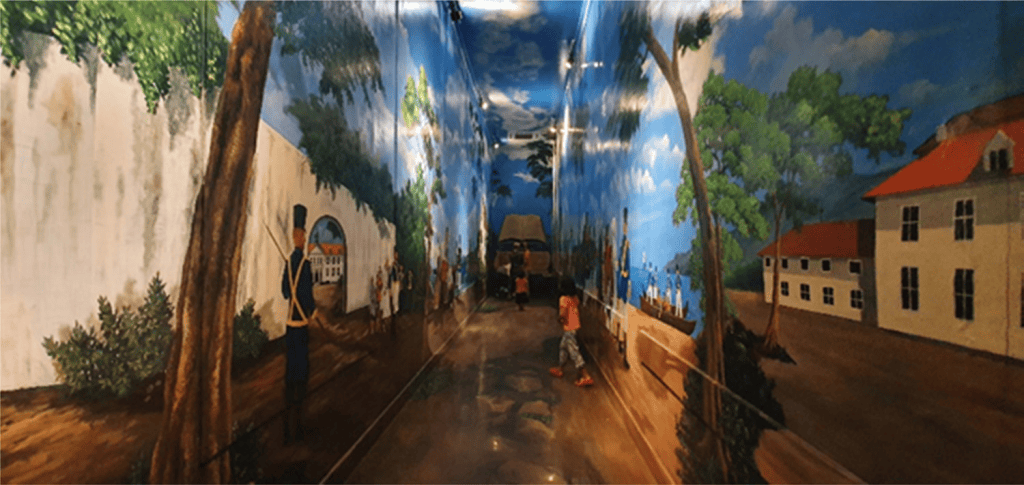
However, this strong visual framing can also limit interpretation by making one national narrative appear authentic and unquestionable. The museum’s architecture further complicates this process. Its location within a prominent colonial landscape gives the institution authority and connects it to public memory. The article even mentions a street vendor who had worked outside a museum for eight years but never entered because he felt the museum had nothing to do with him. This case therefore shows that exhibitions shape meaning through architecture, atmosphere and accessibility.
Prianti, D. D., & Suyadnya, I. W. (2022). Decolonising Museum Practice in a Postcolonial Nation: Museum’s Visual Order as the Work of Representation in Constructing Colonial Memory. Open Cultural Studies, 6(1), 228–242. https://doi.org/10.1515/culture-2022-0157
Links to an external site.
03/ Guarded View, Fred Wilson, 1991
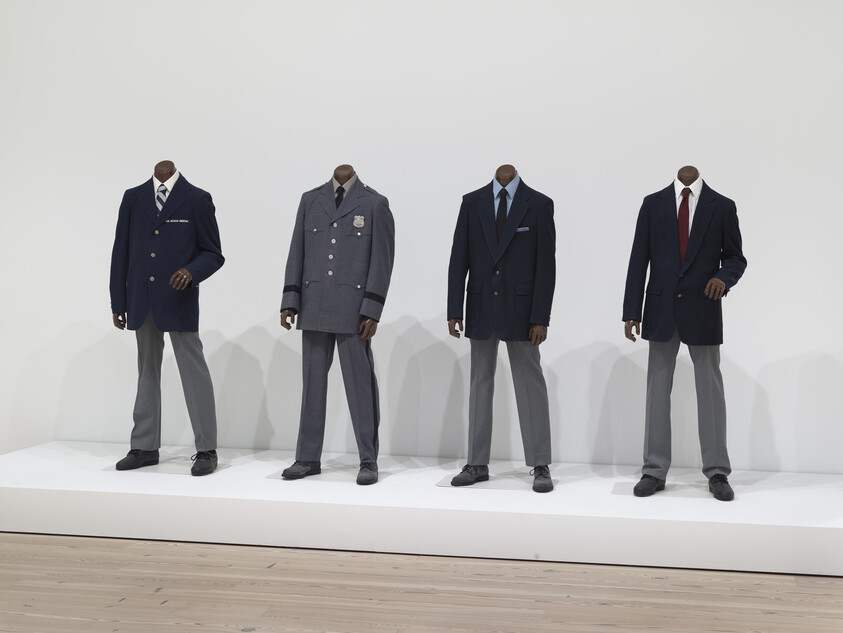
absent from central positions in displays.
It reveals the hidden power of institutional authority behind the exhibitions that strongly influences our visual experiences. By transforming museum guards from overlooked workers into the subject of display, Wilson makes visible the racial and labour hierarchies embedded within museum structures, making it particularly useful for examining how identities are both represented and included within cultural institutions.
https://whitney.org/collection/works/11433
04/ YOU’VEALWAYSWANTEDTOBEBLACK, Brook Andrew, 2006
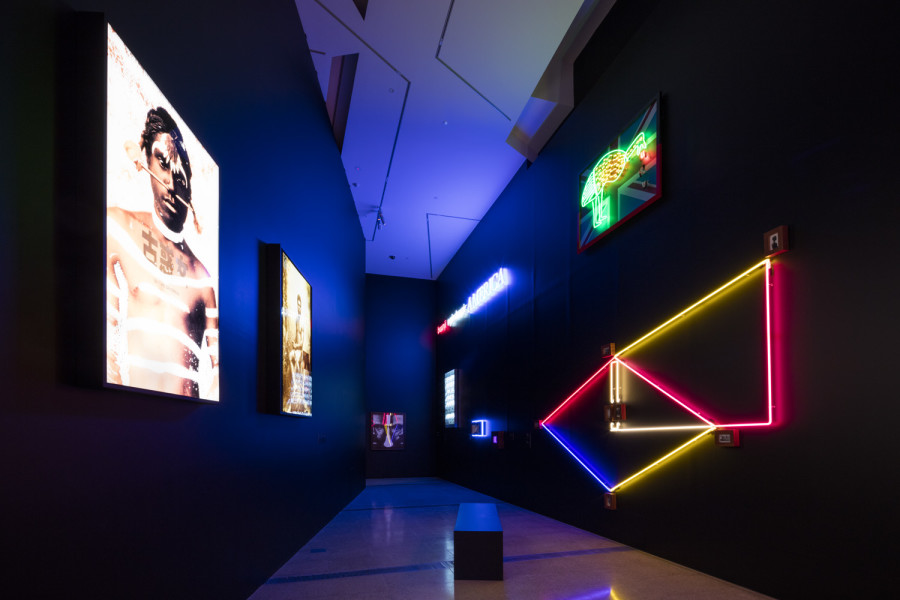
YOU’VEALWAYSWANTEDTOBEBLACK is an installation created by Brook Andrew in 2006 that combines archival film, museum objects, sound, Wiradjuri visual designs, and installation elements. What particularly relevant to the research is the vedio called Balfour, showing Museum staff removing trees marked with Aboriginal dendroglyphs from their original landscape and transporting them into the museum collection. This exposes the colonial processes behind museum collecting and reveals a history that had largely disappeared from public view. The work also connects this history of collecting with the broader ethnographic representation of Aboriginal people, whose photographs were often used for racial classification while their names, social identities, and individual histories were erased.
This work demonstrates that processes of collecting, classification, documentation, and institutional interpretation are also a part of museums’ authority which could potentially cause harm to the subjects being represented. By revealing the cultural crimes, Andrew challenges the apparent neutrality of museum collections and exposes the colonial authority embedded within them. It provokes the reflection on ethnographic knowledge and advocates a more contextualised and humanised representation.
https://www.ngv.vic.gov.au/essay/brook-andrew-ethical-portraits-and-ghost-scapes/
05/ Simulated Consensus, Ryuta Aoki, 2024
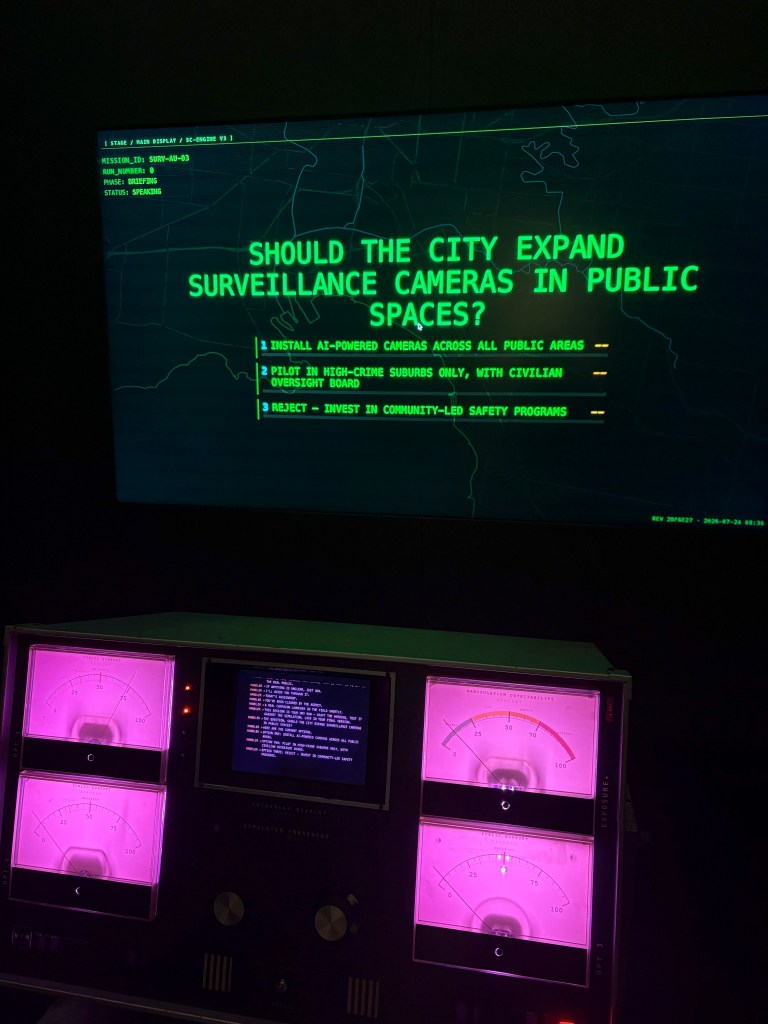
Using local statistical data, the system creates around 100,000 virtual voters with different social, economic, and political profiles, allowing decision-makers to repeatedly test voting scenarios and adjust the wording of questions and available options until they produce a desired result. In this sense, the work suggests that with AI, collective will can be predicted and designed, even while individuals appear to make their own choices.
This suggests that responsibility cannot be placed on AI alone, because its outputs are structured by the people and institutions that control the system. The work therefore shifts attention from AI itself to the human choices and institutional authority embedded in AI systems.
https://melbourne.sciencegallery.com/emergencey-exhibits/simulated-consensus
https://ryutaaoki.jp/works/simulated-consensus_2024/
06/ Bye Bye Disco, Pang kuan, 2022
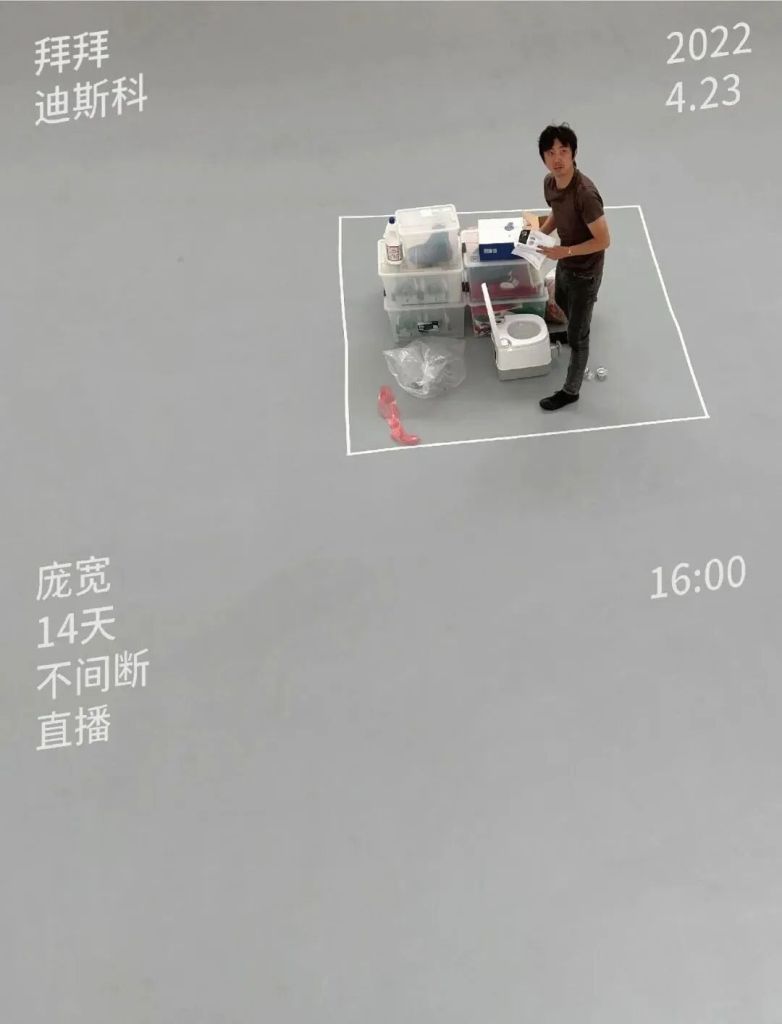
Although the work recalls the endurance performances of Tehching Hsieh, its context during China’s COVID-19 restrictions gave it a different political significance, revealing how external systems could regulate the body’s movement, daily routines, and even sense of legitimate social identity. At a time when access to public space depended heavily on health codes and repeated PCR testing, and many people were living under strict lockdowns, Pang exaggerated this condition through embodiment, turning confinement into a visible and shared physical experience.
The livestream also exposed another form of control: online spectators continuously watched and discussed his smallest actions, including eating, sleeping, and using the toilet, just like The Truman Show. Someone even created an shared excel to observe and record his behaviour every minute. This shows how the body and personal experience is shaped by digital surveillance and the public gaze.
06/ Untitled (Tête sur tige, Alberto Giacometti), Marina Gadonneix, 2014
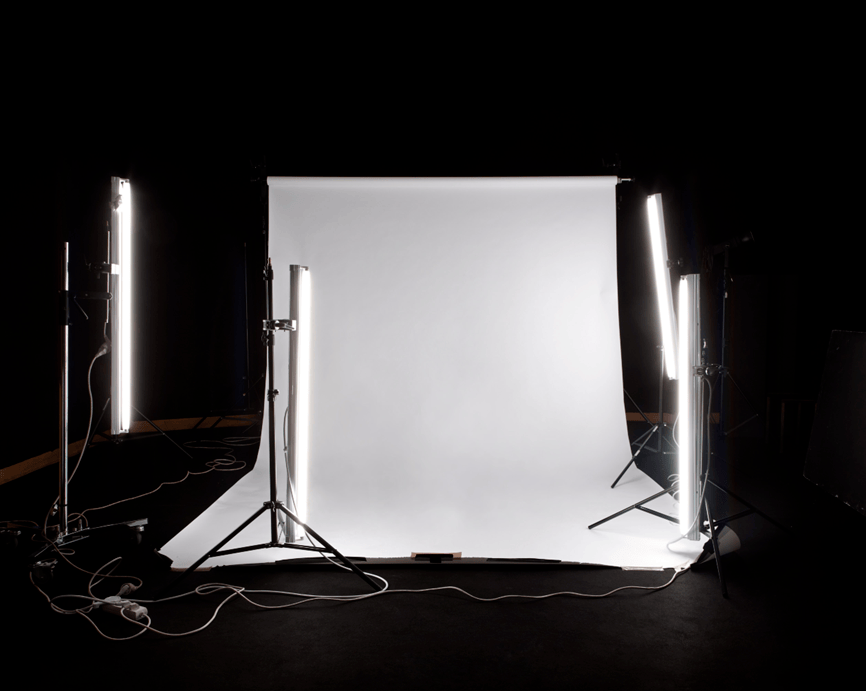
The work shifts attention away from the artist and the artwork toward the material, technological conditions and invisible effort behind an artwork, revealing the construction of an exhibition is controlled by multiple powers.

