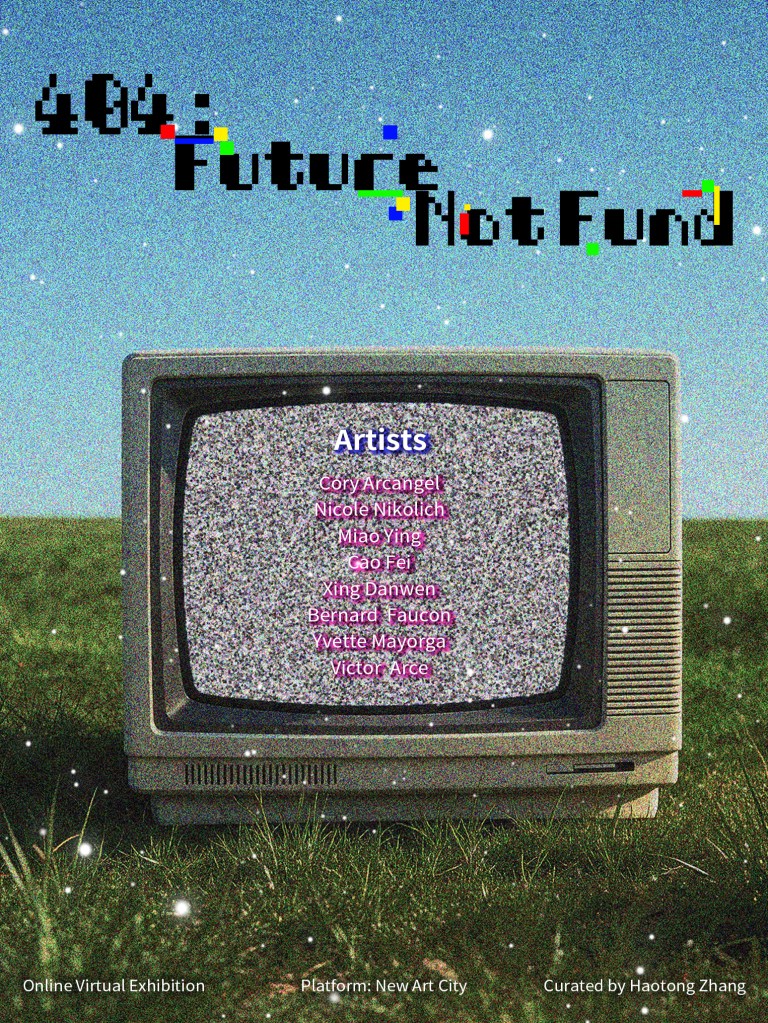
This is an online exhibition examining the contemporary return of retro and Y2K aesthetics as more than a visual trend. It asks why familiar images, technologies and cultural forms from the recent past have become emotionally attractive at a time marked by rapid technological change, digital saturation, competition and uncertainty.
It showcases the curing effect that nostalgic visual aesthetic brings to people while revealing the social reason behind through the artist’s portrayal. By exhibiting artworks that depicting constructed fiction of the past, the project eventually questioning whether we are actually longing for the past itself, or for an imagined period in which the future still seemed open and optimistic.
Theoretical framworks:
“slow cancellation of the future”- Mark Fisher
“ontological security” and “protective cocoon”- Anthony Giddens
“achievement society”- Byung-Chul
“possible selves” – Janelle L. Wilson
Artwork List
01/ Super mario clouds, Cory Arcangel, 2002
In Super Mario Clouds, Cory Arcangel hacked a 1985 Super Mario Bros. cartridge, removing the sound, characters and most visual elements until only the familiar scrolling clouds remained. By reducing the original game to a slow and repetitive image, Arcangel transforms an iconic fragment of early digital culture into a quiet space of memory and contemplation. The work demonstrates how a simple and recognisable visual symbol can trigger emotional connections to childhood and earlier digital experiences. At the same time, the reuse of obsolete hardware challenges the rapid cycle of technological replacement and obsolescence that characterises contemporary digital culture.
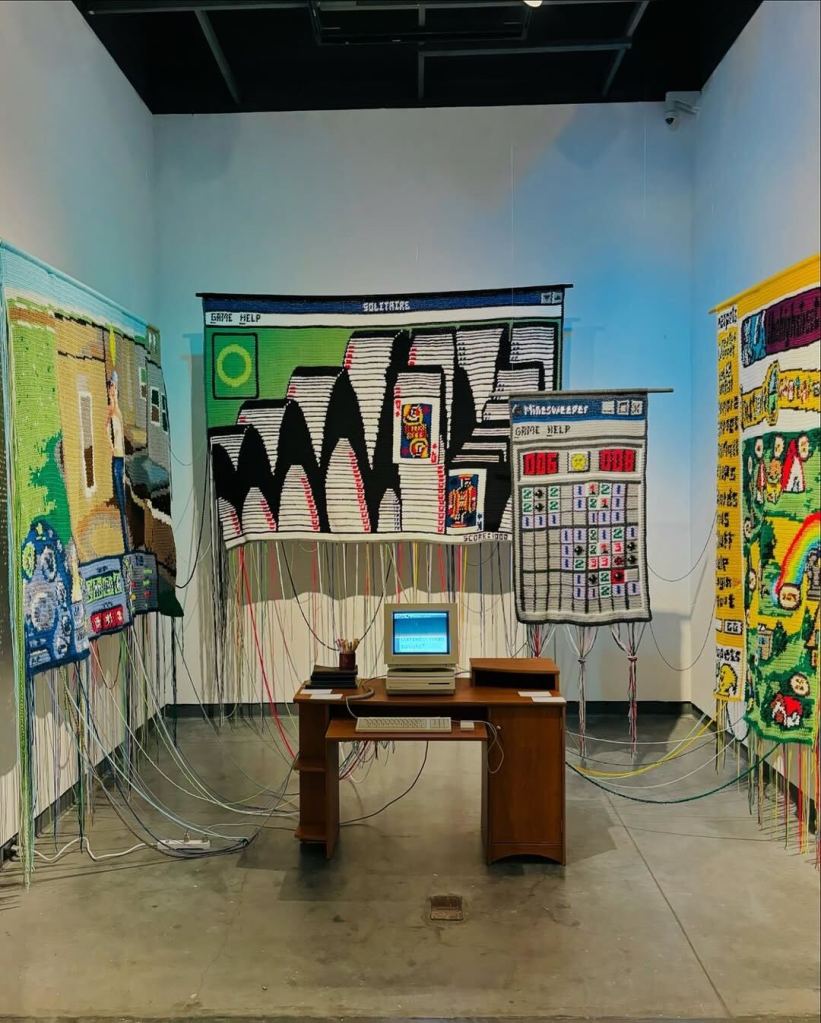
02/ Can I Please Eat in the Computer Room Tonight?, Nicole Nikolich, 2025
Nicole Nikolich transforms memories of adolescence into an immersive textile installation inspired by the comfort and excitement of spending time alone in a childhood computer room. Through colourful crocheted textiles, varied textures and playful forms, the artist reconstructs an intimate domestic environment associated with youthful freedom and escape from everyday routines. Rather than reproducing the past literally, the work turns an ordinary memory into an idealised emotional space. Within the exhibition, the computer room becomes a symbol of familiarity, security and personal refuge, demonstrating how childhood spaces can be reconstructed through nostalgia and experienced again through material and sensory forms.
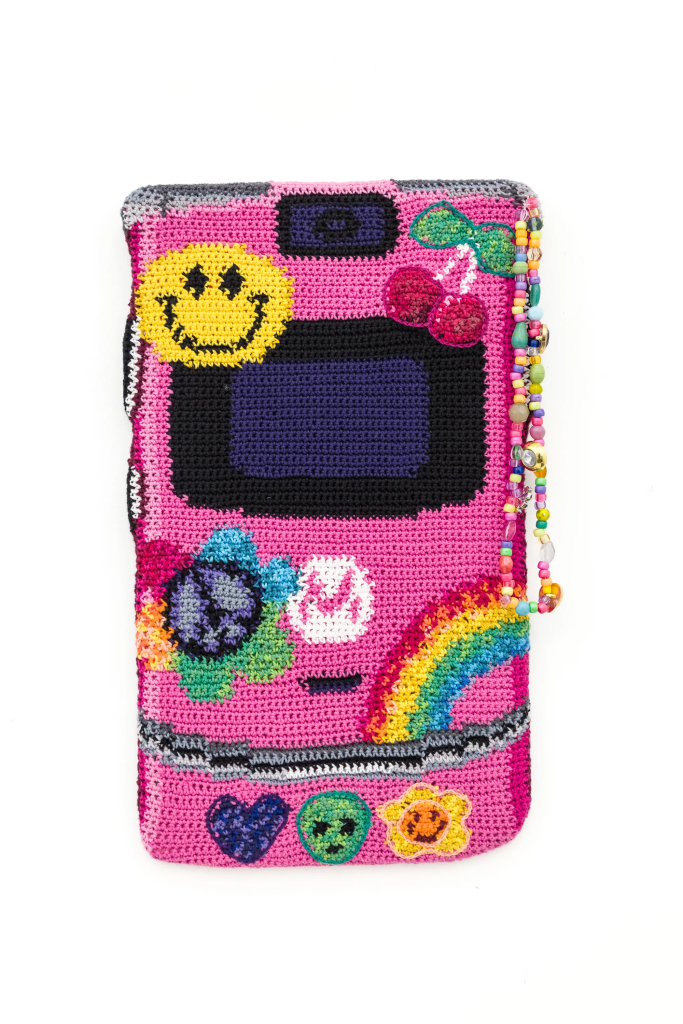
03/ Lisa Frank Taught Me About Style, Nicole Nikolich, 2026
In Lisa Frank Taught Me About Style, Nicole Nikolich recreates an object associated with early-2000s childhood and digital culture through acrylic crochet. The handmade surface transforms a familiar technological form into a soft, colourful and tactile object. Removed from its original function, the obsolete device becomes less important as technology and more significant as an emotional artefact. The work reflects how objects from the recent past can acquire new meanings through nostalgia, especially when they become associated with childhood, identity and collective cultural memory. The contrast between outdated technology and slow handmade craft also resists the speed and disposability of contemporary digital devices.
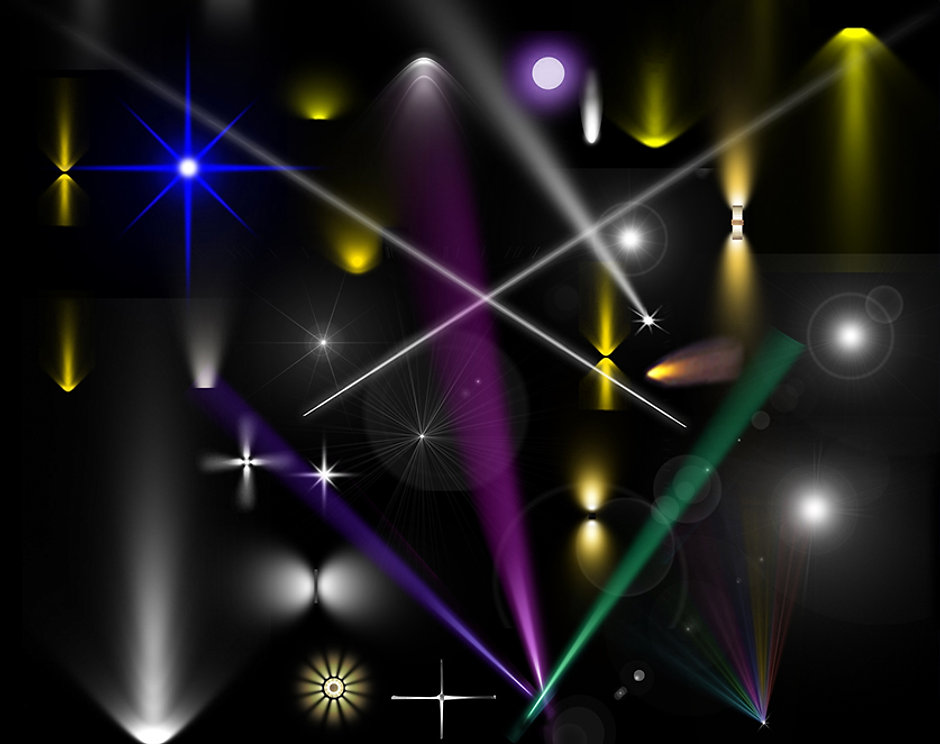
04/ Effect #1, Miao Ying, 2016
In Effect #1, Miao Ying translates Photoshop lighting effects from the digital screen into a handmade oil painting. The work was commissioned through Taobao and produced by painters from Shenzhen’s Dafen Village, an area associated with the mass reproduction of famous paintings. Instead of copying a traditional masterpiece, the painters reproduce digital effects normally used to enhance computer-generated images. By making these effects the central subject of a physical painting, Miao creates a paradox between digital simulation and manual labour. The work reflects the artificiality of contemporary visual culture and questions the increasingly blurred boundary between physical images, digital effects and mediated reality.
05/ COSPlayers, Cao Fei, 2004
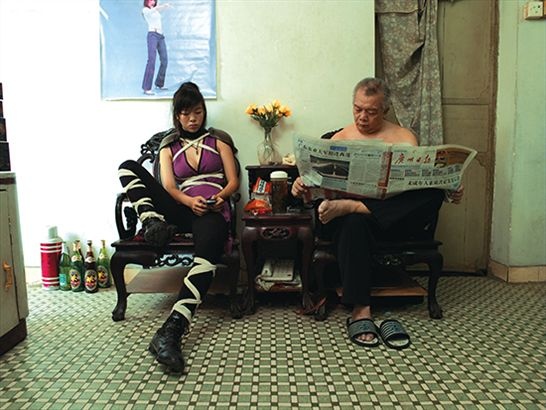
COSPlayers is a short video in which the artist follows young people dressed as characters from video games and anime as they move through the city and perform imaginary battles. Through their fictional identities, the participants temporarily escape the limitations and frustrations of everyday life, imagining themselves as characters with greater freedom and power. Behind this fantasy, however, lies a sense of social alienation, as their lifestyles, aspirations and identities are not always understood by society or their families.
06/ Nova 13, Cao Fei, 2019
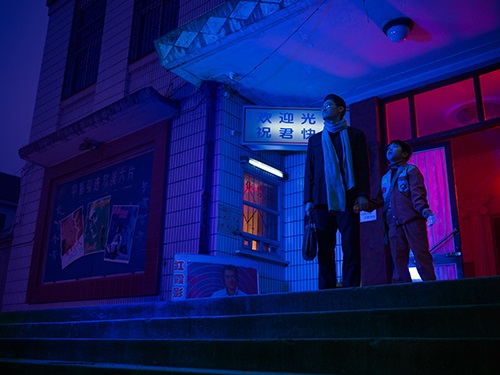
Nova 13 originates from Cao Fei’s science-fiction project Nova, which explores the relationship between technological progress, human identity and virtual existence. The narrative takes place in a fictional environment combining the atmosphere of twentieth-century China with futuristic technological imagination. A scientific experiment intended to digitise human beings transforms a young man into a digital consciousness trapped between physical and virtual realities. By bringing historical imagery together with speculative technology, Cao creates a sense of temporal dislocation.
07/ Urban Fiction, Xing danwen, 2004
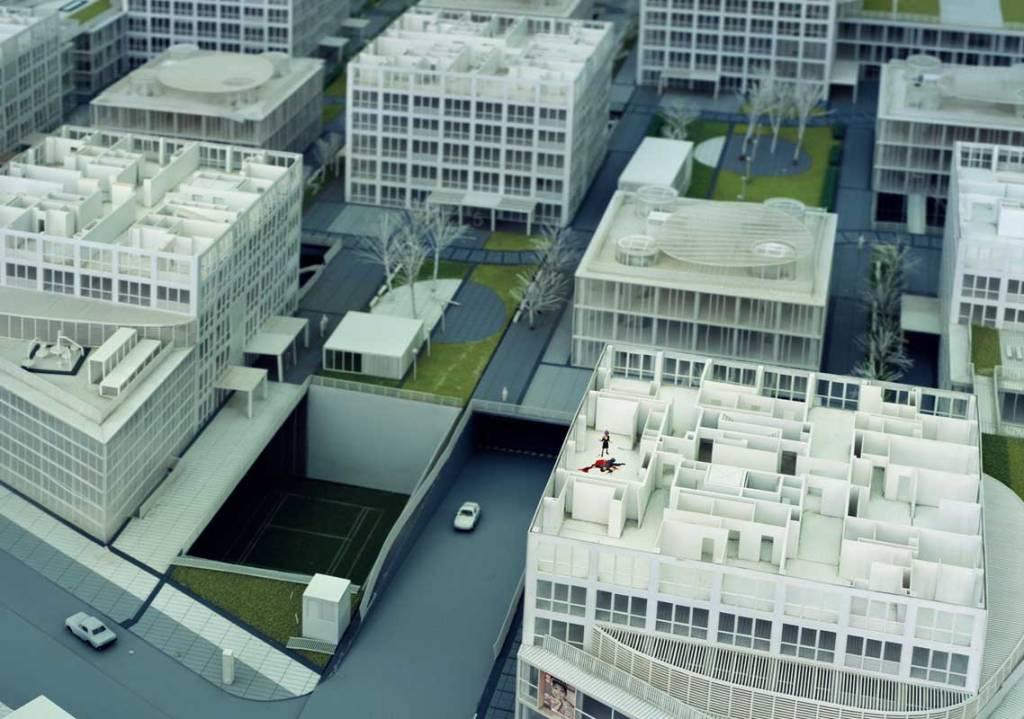
In the Urban Fiction series, Xing Danwen photographs detailed architectural models used by real-estate developers and digitally inserts small human figures engaged in theatrical, intimate or unsettling situations. The idealised urban environment originally designed to sell visions of luxurious modern living becomes a psychological landscape of desire, isolation and anxiety. The miniature figures appear fragile and disconnected within enormous, artificial cityscapes. By disrupting the polished visual language of property marketing, Xing exposes the emotional tensions hidden beneath narratives of urban progress.
08/ Les Grandes Vacances, Bernard Faucon, 1976–1981
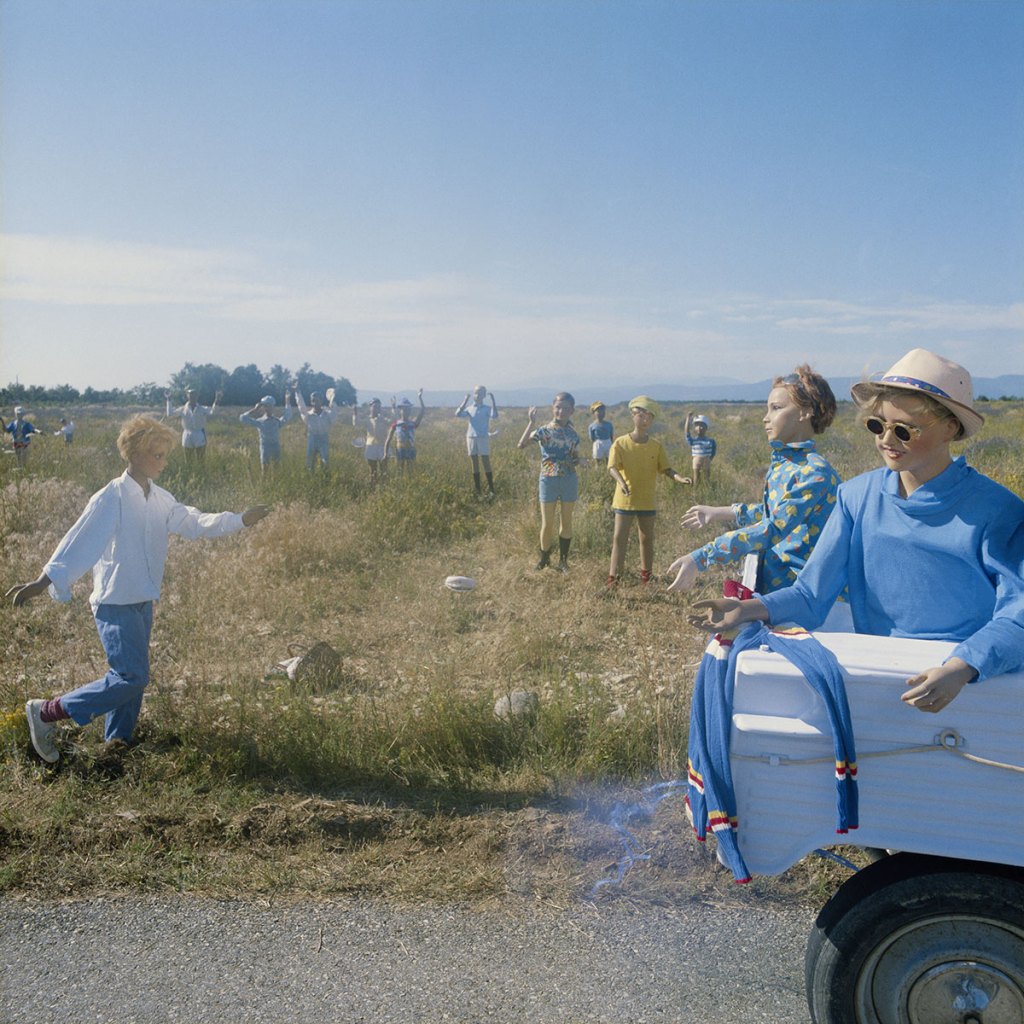
Bernard Faucon’s Les Grandes Vacances is a series of staged photographs in which child mannequins, and occasionally real children, are placed within landscapes and domestic spaces associated with Provence. Rather than documenting an actual childhood, Faucon constructs an imagined one through memory, fantasy and photographic staging. The mannequins create scenes that feel simultaneously intimate and artificial, emphasising photography’s ability to freeze and idealise time.
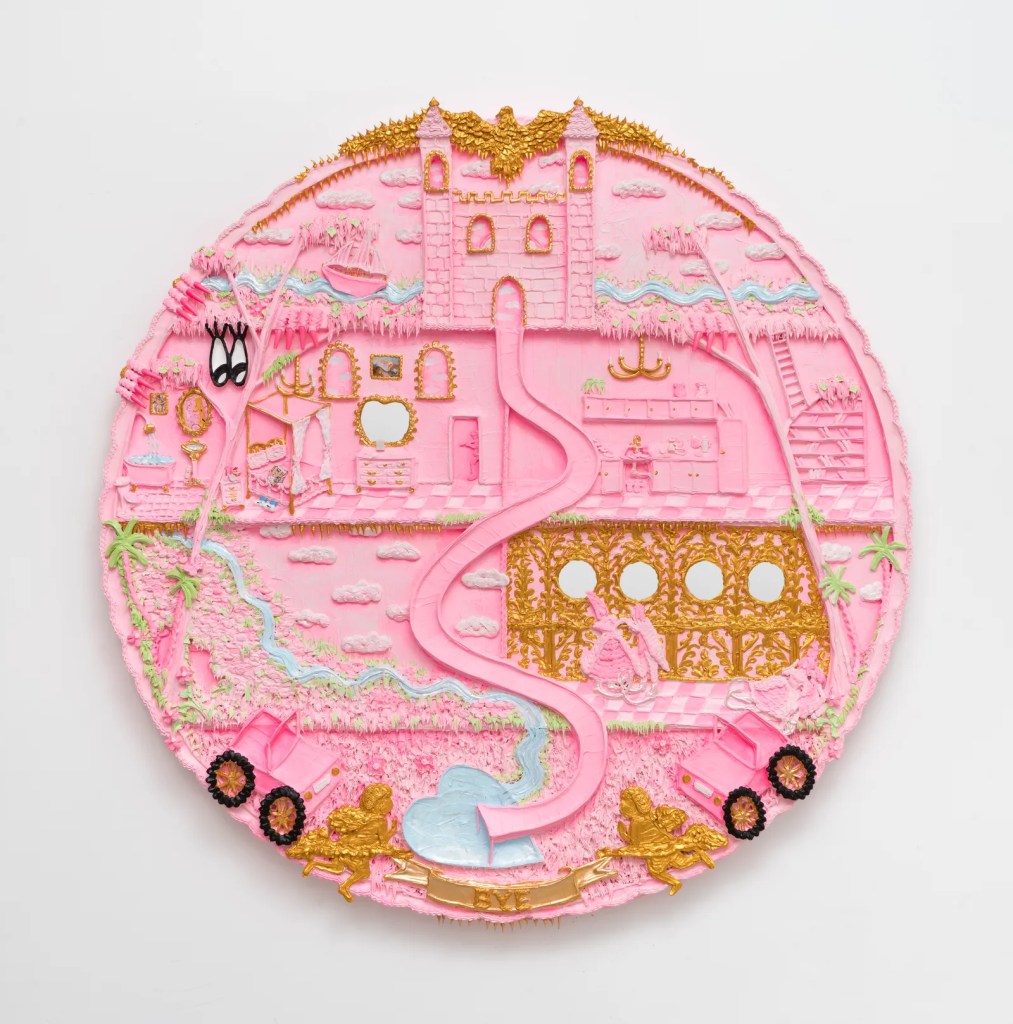
09/ BYE BYE BYE, Yvette Mayorga, 2023
Yvette Mayorga’s BYE BYE BYE combines highly decorative materials and an exaggerated pink visual language with imagery drawn from popular culture, surveillance and contemporary American life. The work’s sugary, excessive surface recalls childhood aesthetics, decorative objects and forms of fantasy, while simultaneously containing more complicated references to identity, labour and observation. This tension between visual pleasure and underlying anxiety makes the work relevant to the exhibition’s final section. Rather than presenting nostalgia as a transparent memory of the past, Mayorga demonstrates how familiar and attractive visual languages can conceal more difficult social realities and contribute to highly constructed versions of memory and identity.
References
Academic References:
Fisher, Mark. Ghosts of My Life: Writings on Depression, Hauntology and Lost Futures. Winchester, UK: Zero Books, 2014.
Giddens, Anthony. Modernity and Self-Identity: Self and Society in the Late Modern Age. Cambridge: Polity Press, 1991.
Han, Byung-Chul. The Burnout Society. Translated by Erik Butler. Stanford, CA: Stanford University Press, 2015.
Pichierri, Marco. Nostalgia Marketing: Rekindling the Past to Influence Consumer Choices. Cham: Palgrave Macmillan, 2023. https://doi.org/10.1007/978-3-031-20914-7.
Santini, Fernando de Oliveira, Weng Marc Lim, Wagner J. Ladeira, Diego Costa Pinto, Márcia M. Herter, and Tareq Rasul. “A Meta-Analysis on the Psychological and Behavioral Consequences of Nostalgia: The Moderating Roles of Nostalgia Activators, Culture, and Individual Characteristics.” Psychology & Marketing 40, no. 10 (2023): 1899–1912. https://doi.org/10.1002/mar.21872.
Sayers, Nicola. The Promise of Nostalgia: Reminiscence, Longing and Hope in Contemporary American Culture. London: Routledge, 2020.
Wilson, Janelle L. “Future Imaginings: Nostalgia for Unrealized Possible Selves.” In Nostalgia Now: Cross-Disciplinary Perspectives on the Past in the Present, edited by Michael Hviid Jacobsen, 66–77. London: Routledge, 2020.